


Views: 0 Author: Site Editor Publish Time: 26-11-2026 Origin: Site
Three components are sold as protection, and they are not interchangeable: a ring in the gland, a scraper for heavy contamination, and a boot over an exposed joint. Here is how to tell which one a cylinder needs.
Most cylinder failures do not start inside the cylinder. They start at the rod, where dust, mud and metal particles are carried in on every retraction and delivered to the sealing lip. Dust seals cost little compared with the repair they prevent, and they are the part most often specified by habit rather than by working condition. Dust seals, wiper seals and dust boots all do protection work, but at different places, in different ways, against different threats.
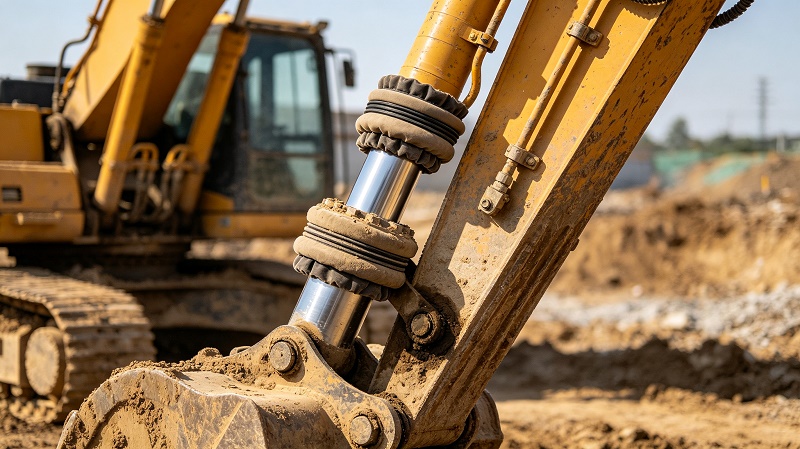
A dust seal is a lip ring in the gland at the rod exit; a wiper seal is the same family built for heavier scraping; a dust boot is an external sleeve over an exposed joint.
Dust seals handle fine abrasive powder; wiper seals handle mud, ice and swarf; boots handle bulk debris and water where no ring is present at all.
Polyurethane at 90–95 Shore A is the default wiper material; NBR suits light pneumatic duty, filled PTFE suits high speed, FKM suits heat and aggressive fluids.
A rounded, glazed lip means abrasion; a hardened, cracking lip means fluid or heat; a torn or ballooning boot means pressure or mechanical interference.
Dusty and wet conditions together usually need two components — a boot in front of a wiper is the common combination.
The confusion begins with catalogues. In hydraulic sealing, dust seals and wiper seals are both lip rings that sit in a groove at the rod exit, and many suppliers use the two names for the same part. The distinction that matters on a machine is not the label but the duty: a light single lip for fine dust, or a heavier scraper that survives mud, ice and metal particles. A dust boot is a different product entirely — a flexible rubber sleeve that covers a joint or an exposed rod and never sees system pressure.
Position explains the difference better than any definition. The ring sits inside the gland, outboard of the rod seal, lip pressed against the rod; it scrapes as the rod retracts and usually allows a thin oil film back out. The boot sits outside the machine, clamped over a joint such as a propshaft. One works on a sliding surface measured in microns; the other covers a volume of air.
| Component | Where it sits | Works against | Holds pressure? |
|---|---|---|---|
| Dust seal (single lip) | Gland groove at rod exit | Fine dust, grit, light water spray | No, but must not leak oil out |
| Wiper seal / scraper | Same groove, heavier profile | Mud, ice, swarf, high-speed rods | No, secondary lip backs up the seal |
| Dust boot / dust cover | Outside, over a joint or rod | Bulk debris, water, stone chips | No, protects a cavity |
The right question is not "which is better" but "what is on the rod". Fine abrasive powder — quarry dust, cement, foundry sand — behaves like grinding paste at the lip. It needs a sharp scraping edge and enough elasticity to follow the rod, which is why polyurethane single-lip dust seals are the default in construction and mining cylinders. Fitting dust seals to a clean indoor press just adds friction.
For dust seals, mud and water are a different problem: they arrive as a film and dry into a crust. A single lip can pass the film through on the return stroke; a heavier wiper with a second lip, or a metal-caged scraper, keeps the crust outside where it can be shed. Metal chips and swarf — machining centres, scrap handling, demolition — cut rather than abrade, so the lip needs high tear strength and a housing that will not let the chip wedge under the edge.
Bulk debris is where boots earn their place. A propshaft joint or a linkage has no gland to put a ring in and no oil pressure to seal; it needs a flexible cover that keeps chips and water out while it articulates. The same applies to a cylinder rod under an aggregate hopper: a boot removes most of the contamination before the wiper sees it.
| Condition | Dominant threat | First choice | Why |
|---|---|---|---|
| Quarry, cement, foundry | Fine abrasive powder | PU single-lip dust seal | Sharp edge, high tear strength, low cost |
| Mud, rain, wash-down | Wet contamination that dries | Double-lip wiper seal | Second lip sheds the crust |
| Machining, scrap handling | Chips and swarf | Heavy scraper, caged design | Resists cutting and wedging |
| Exposed joint, no gland | Bulk debris, stone chips | Dust boot / dust cover | Covers the cavity itself |
Within the ring family, four materials cover almost every case for dust seals, chosen by hardness, temperature and speed. Polyurethane at 90–95 Shore A gives the strongest combination of tear strength and recovery for scraping at moderate temperature. Nitrile at 80–90 Shore A is softer and more forgiving on low-pressure pneumatic rods. Filled PTFE, at 55–65 Shore D, is chosen where friction and speed matter more than elasticity. FKM covers hot circuits and aggressive fluids where PU would harden.
For dust seals, construction matters as much as compound. A single lip is compact and adequate for fine dust; a double lip adds a second scraping edge and a small cavity that traps what the first lip passes; a metal-caged scraper holds the lip rigidly so it cannot deflect under a chip. Grooves are standardised, so the housing can be checked against ISO 6195 wiper-ring housing dimensions before a profile is chosen — a ring that does not fit its groove behaves like no ring at all.
Boots follow different rules because they carry no pressure. They are moulded in CR, HNBR, silicone, EPDM or FVMQ, at hardness around 50 Shore A, with wall thickness and corrugation geometry deciding how they fold. Tolerance is typically ±0.05 mm, and the material must stay flexible at the lowest service temperature, not merely resist heat.
| Material | Temperature band | Hardness | Typical use |
|---|---|---|---|
| Polyurethane (PU) | -35 to +100 °C | 90–95 Shore A | Abrasive dust, mud, general mobile duty |
| NBR | -30 to +110 °C | 80–90 Shore A | Pneumatic rods, light dust, mineral oil |
| Filled PTFE | -60 to +200 °C | 55–65 Shore D | High speed, low friction, chemical exposure |
| FKM | -20 to +200 °C | 80–90 Shore A | Hot circuits, synthetic and bio fluids |
| CR / HNBR / silicone boot | Up to +190 °C for silicone | About 50 Shore A | External covers, joints, driveline protection |
Tell us the rod diameter, the contamination you see and the duty cycle — you will receive a rod seal and wiper selection suggestion that fits the existing gland.
Get a QuoteDust seals rarely fail dramatically; they degrade in ways that are readable if the part is inspected rather than replaced. The damage pattern usually identifies the mechanism, which is the difference between fixing a cylinder and repeating the failure next season.
When the scraping edge is worn round and polished, the part has been abraded rather than chemically attacked. Fine grit has polished lip and rod, and the rod shows a dull band where the ring travels. The fix is not a harder ring alone: check the lead-in, the rod finish and ISO 4406 cleanliness codes, because a rough or contaminated rod will round a new lip the same way.
Cracks at the lip edge, a lip worn into a glassy curve, or visible swelling point to the environment rather than to particles. Heat, incompatible fluid or a wash-down chemical has changed the compound: a PU wiper above its band hardens, an NBR ring in the wrong fluid swells and drags. In both cases the material, not the profile, is the error.
Boots fail in two recognisable ways. A split at the corrugation or clamp means interference — stretched past its fold range or rubbed by a neighbouring part. A ballooned boot means pressure is building in a cavity that should breathe, typically a blocked vent or a joint greased under pressure. Replacing the boot without clearing the vent repeats the failure.
| Sign | Mechanism | Check before replacing |
|---|---|---|
| Rounded, glazed lip | Abrasion by fine grit | Rod finish, lead-in chamfer, oil cleanliness |
| Hardened or cracked lip | Heat or fluid attack | Continuous temperature, fluid family |
| Swollen lip, dragging rod | Wrong compound | Fluid compatibility, cleaning agents |
| Boot split at a fold | Stretch or interference | Travel range, clearance to nearby parts |
| Boot ballooning | Trapped pressure | Vent path, grease pressure |
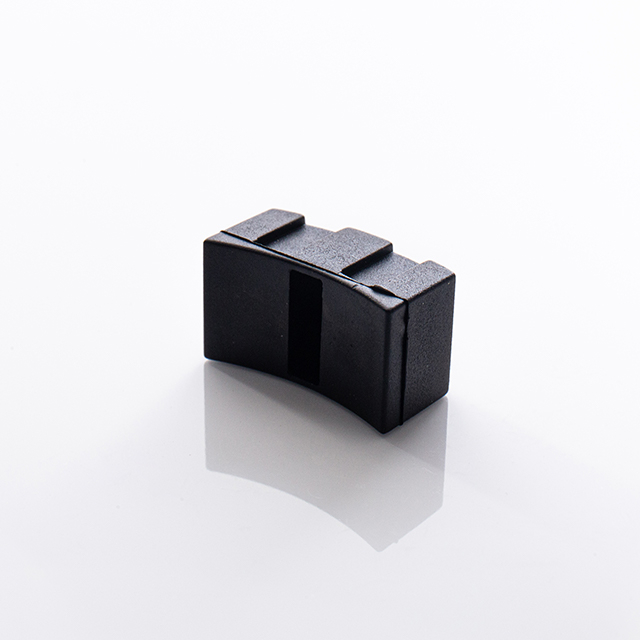 Automotive Dust Cover
Silicone cover that keeps dust, dirt and moisture off underbody components.
View Product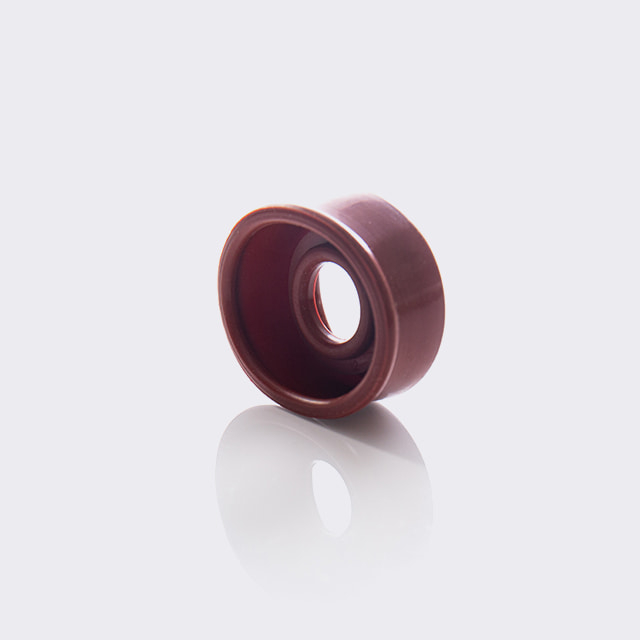 Dust Boot Cover Seals
S-shaped propshaft boot in CR or HNBR, stable at high rotational speed.
View ProductThe ring-type dust seals, including the single-lip FC profile, are grouped on the wiper seal range page, which also lists the material and hardness combinations; the two boot designs sit under separate product pages above.
Single-component thinking breaks down as soon as a machine works in more than one condition. A wheel loader loading aggregate in the rain combines abrasive dust with water; a cylinder rebuilt with a heavier wiper alone still passes the water film that carries the grit. The answer is a stack: a boot to remove bulk contamination, a wiper to scrape the residue, and the rod seal behind both to hold pressure.
Three combinations cover most of the field. First, boot plus wiper: the boot handles chips and wash water, the wiper the film that gets past it. Second, double-lip wiper plus rod seal: the second lip keeps the seal lip clean, which extends life more than upgrading the compound. Third, wiper plus buffer: on fast-cycling cylinders a buffer absorbs the spike so the wiper is not loaded by pressure it was never designed to hold.
Over-specifying has a cost: a heavier scraper adds friction and can starve the rod seal of oil, and an unvented boot can trap pressure. For dust seals, the rule is to add components only for a threat that has actually appeared — scored rods, dirty oil analysis, or a failure history.
| # | Question | What it decides |
|---|---|---|
| 1 | What is on the rod when it retracts? | Ring, scraper or boot |
| 2 | Is there a gland to hold a ring? | Whether an external cover is the only option |
| 3 | Rod speed and cycle rate | Elastomer lip or filled PTFE |
| 4 | Continuous temperature | PU, NBR, FKM or boot compound |
| 5 | Wet, dry or both? | Single lip or double lip plus boot |
Unsure whether your cylinders need dust seals, a heavier wiper or a boot? Send a photo of the rod end and the operating conditions — the team at MingYu will confirm the layout before you order.
Contact UsFor dust seals, protection is a layout decision before it is a material decision. A ring in the gland, a heavier scraper for wet contamination, and a boot over anything that cannot take a ring — each addresses a different threat at a different place. Dust seals chosen by habit are either too light for mud or heavier than lubrication allows; chosen by condition, they are the cheapest reliability gain on the machine.
If you are looking for a dependable dust seals manufacturer, MingYu is worth considering: the company produces single and double-lip wiper rings, caged scrapers and moulded boots in PU, NBR, PTFE, FKM, CR and silicone, and reviews rod-end conditions against the existing housing before quoting.
Are dust seals and wiper seals the same part?
Often, yes. Both are lip rings in the rod-exit groove, and catalogues use the names interchangeably. The difference is duty: a light single lip for fine dust, a double-lip scraper for mud and chips.
Can a dust boot replace a wiper ring?
No. A boot covers a cavity but does not scrape a moving rod, so a film of contamination still reaches the gland. It reduces the load on the wiper rather than replacing it.
Which material should a wiper be in a cold climate?
Polyurethane dust seals remain workable to about -35 °C and filled PTFE goes lower; below that the lip stiffens and stops following the rod.
Why does a new wiper leak oil out of the gland?
Usually because the lip is too tight against the rod and scrapes the film away, or the groove depth is wrong. A wiper should remove contamination and leave a thin film.
How often should boots be inspected?
At every service interval that involves the joint, and immediately after any impact or wash-down. A split boot lets water into a joint, and the dust seals behind it take the damage.
What data is needed to specify a wiper or boot?
Rod diameter and finish, groove or joint dimensions, contamination type, rod speed, continuous temperature, fluid, and the failure history if there is one.


