


Views: 0 Author: Site Editor Publish Time: 16-11-2026 Origin: Site
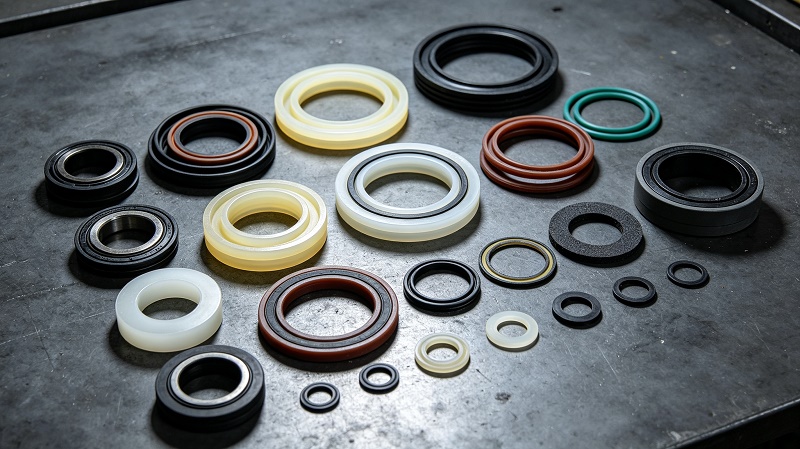
Specifying hydraulic cylinder seals is a measurement exercise, not a catalogue lookup. This walk-through follows the order a workshop actually works in: cylinder data, groove, duty, then profile.
A leaking rod seal rarely announces itself politely. It shows up as a slow drip under a machine that ran clean last week, a cylinder that creeps when it should hold position, or the same seal replaced twice in one season. In most of those cases the seal was not defective — the match was. Getting hydraulic cylinder seals right means confirming the cylinder, measuring the groove, defining the duty and only then choosing a profile. Follow that flow and most selection errors disappear before the first quotation.
Start from the cylinder, not from a part number: bore, rod diameter, stroke and acting type decide which hydraulic cylinder seals can physically fit.
Never measure a used seal. Measure groove width, depth and surface finish — swollen rubber reads larger than its original size.
Fluid, temperature and pressure set the material and whether a back-up ring or combination profile is required.
A complete kit covers piston seal, rod seal, wiper, wear rings and static seals; hydraulic cylinder seals supplied without a wiper will leak again within months.
The three costliest mistakes are measuring the worn seal, ignoring groove finish and extrusion gap, and mixing single-acting with double-acting profiles.
Selection begins on the machine, not in a catalogue. Five numbers describe almost any cylinder well enough to shortlist a kit: bore (cylinder inside diameter), rod diameter, stroke, working pressure and acting type. Bore and rod together define the radial gap the seal must bridge and the space left for a guide ring; pressure decides whether that gap needs back-up support. If a nameplate or OEM parts reference survives, record it too — a model number narrows thousands of possible hydraulic cylinder seals to a handful.
| Data point | Where to find it | Why it decides the kit |
|---|---|---|
| Bore (cylinder ID) | Nameplate, drawing, or caliper in an unworn zone | Piston seal outside diameter and groove depth |
| Rod diameter | Drawing, or micrometer at three rod positions | Rod seal and wiper inside diameter |
| Stroke and cycle rate | Machine specification, cycle timing | Surface speed and profile choice |
| Working pressure | Relief valve setting, gauge, circuit diagram | Extrusion risk and back-up ring need |
| Fluid and temperature | Reservoir label, oil analysis, thermocouple | Elastomer choice and continuous temperature limit |
| Acting type and mounting | Drawing, or observation during a stroke | Single-acting versus double-acting profile |
Two habits prevent most errors here. Measure the bore away from the end-of-stroke wear band, where it is still at nominal size. Measure the rod at three points — near the wiper, mid-stroke, near the piston — because a bent rod destroys a correctly specified seal, and no set of hydraulic cylinder seals compensates for it.
This is where cylinder seal identification usually goes wrong. A seal that has run a season has absorbed oil, taken a permanent set and lost material at the lip; its diameter and cross-section no longer represent the original part. Ordering "the same size" produces hydraulic cylinder seals a fraction off — tight enough to score the bore, or loose enough to weep past the lip.
Measure the housing instead: groove width, depth, bottom radius, lead-in chamfer and the finish of the sliding surface. Housing dimensions for reciprocating piston and rod seals are standardised, so a measured groove often converts directly into a nominal size using the tables in ISO 5597 housing dimensions. Static O-ring positions are read against O-ring size standards rather than guessed from the old ring.
| Check | Tool | Target | If it fails |
|---|---|---|---|
| Groove width | Caliper, depth gauge | Per drawing tolerance for the profile series | Seal cannot seat; lip pre-load is wrong |
| Groove depth | Depth gauge, groove micrometer | Nominal for the chosen cross-section | Over-compression, friction, lip wear |
| Surface finish | Roughness tester or comparator | Fine on sliding surface, grip on groove bottom | Leak path or lip abrasion |
| Extrusion gap | Bore and rod measurement | Small enough for pressure and material | Seal nibbled into the gap |
| Lead-in chamfer | Visual, caliper | Rounded and burr-free | Lip cut during assembly |
| Coaxiality | Bore gauge, dial indicator | Within drawing tolerance | Uneven contact, one-sided leakage |
Target values belong to the cylinder drawing and profile data sheet. Where the drawing is missing, the measured groove plus standard housing tables is the reliable route — not the failed part.
Two cylinders with identical dimensions can need different materials: mineral oil, fire-resistant fluids and biodegradable esters attack elastomers differently, and a compound that performs well in one swells or hardens in another. Temperature follows the same logic: nitrile (NBR) covers ordinary industrial duty, fluorocarbon (FKM) is chosen when heat or media exceed what NBR tolerates, and polyurethane (PU) is selected where abrasion resistance matters more than chemical exposure.
Pressure decides geometry rather than material alone. As pressure rises the seal is pushed harder into the gap between piston and bore; beyond a certain combination of pressure and clearance a single lip extrudes and fails. That is where a back-up ring or combination profile stops being optional. Contamination belongs in the same conversation: particles score rods and accelerate lip wear, and fluid cleanliness is commonly specified with the ISO 4406 cleanliness coding method.
| Duty factor | What to collect | Effect on hydraulic cylinder seals |
|---|---|---|
| Fluid family | Mineral, fire-resistant, biodegradable, water-based | Elastomer and back-up material pairing |
| Continuous temperature | Measured at the cylinder, not ambient | Compound choice and maximum speed |
| Peak pressure | Relief setting plus spikes | Back-up ring, combination profile, groove depth |
| Sliding speed | Stroke and cycle time | Profile type, lip geometry, lubrication demand |
| Contamination | Oil analysis, filter rating, environment | Wiper choice, wear ring material, service interval |
Send your bore, rod diameter, pressure, temperature and fluid type — you will receive a selection chart for matching hydraulic cylinder seals plus a quotation.
Get a QuoteWith dimensions and duty defined, matching hydraulic cylinder seals becomes mechanical. A complete kit normally contains six functional groups: piston seal, rod seal, wiper (dust seal), wear or guide rings, static seals such as O-rings, and back-up rings where pressure demands them. A kit without the wiper or the wear rings is not a kit — it is a partial repair that returns to the workshop.
Combination profiles integrate sealing and guidance in one groove, which is why they suit compact one-piece pistons. The DAS combination seal is a double-acting piston seal built from an elastic element with three sealing lips plus two support rings and two guide rings; the middle lip carries the main dynamic seal while the outer lips act as auxiliary seals. Its published envelope is a maximum working pressure of 35 MPa, a maximum sliding speed of 0.5 m/s and -30 °C to +100 °C in mineral, fire-resistant and eco-friendly hydraulic oils — medium-to-heavy mobile duty rather than extreme high-pressure circuits.
Rod sealing follows different logic because the rod is exposed. The MBD piston rod seal uses two sealing lips with an extrusion-resistant back-up ring and keeps a lubrication film to limit dry friction, which is why it serves piston rods and plungers in heavy-duty machinery and static pressure systems. GDKK belongs to the same compact combination family, used where installation space is tight and a single-groove solution is preferred. Where a cylinder runs at higher pressure than a single lip can hold, the answer is not a thicker lip — it is a profile with back-up support, or a change of groove geometry.
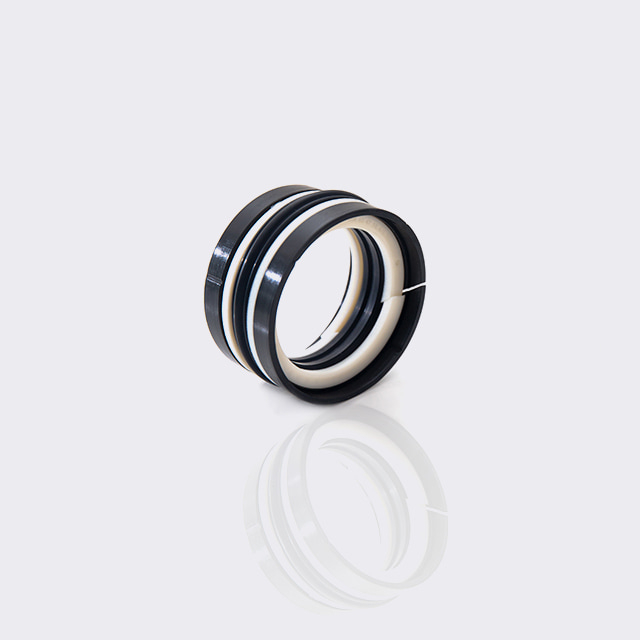 DAS Combination Seal
Double-acting piston seal with integrated support and guide rings for compact pistons.
View Product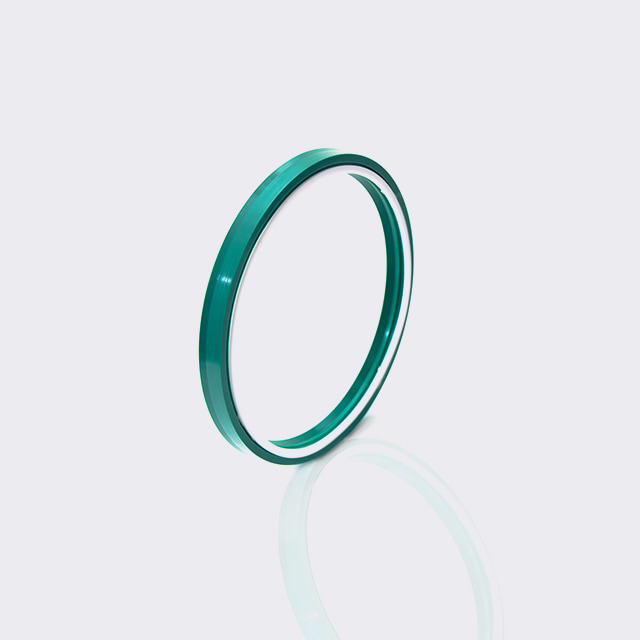 MBD Piston Rod Seal
Two-lip rod seal with extrusion-resistant back-up ring for heavy-duty cylinders.
View ProductThe full range of profiles, materials and groove series is listed on the product overview page, and mobile equipment applications are grouped under construction, mining and agricultural equipment seals — a useful cross-check when one fleet mixes excavators, loaders and implements.
Three mismatches account for most premature failures of hydraulic cylinder seals, and each one is cheap to prevent.
The most common failure starts with good intentions: the technician measures the removed seal, sends the dimensions and receives a kit built to those numbers. Because the old part has swollen and flattened, the new hydraulic cylinder seals are slightly undersized in cross-section and oversized in diameter. They install easily — usually too easily — and begin leaking within weeks. The fix is procedural: quote the groove, not the failed part, and keep the old seal only as a profile reference.
A seal can be dimensionally correct and still fail early if the groove bottom is rough, the chamfer carries a burr, or the extrusion gap is wider than the pressure allows. The signature is nibbling at the lip edge, a shaved lip after assembly, or a leak appearing only at peak pressure. Changing the hydraulic cylinder seals specification without fixing the housing repeats the failure: measure the gap, inspect the chamfer, check the finish.
Single-acting and double-acting profiles are not interchangeable, and the difference is invisible once the seal sits in its groove. A single-acting rod seal fitted to a cylinder pressurised on both faces is pushed off its seat on the return stroke; a double-acting piston profile in a single-lip housing leaves no room for the guide element. The same error appears with materials: an NBR kit in a circuit beyond its fluid or temperature range hardens, takes a set and leaks — and hydraulic cylinder seals are blamed instead of the specification.
| # | Checkpoint | Pass condition |
|---|---|---|
| 1 | Bore and rod measured | Recorded with tool and location |
| 2 | Groove width and depth measured | Checked against housing table or drawing |
| 3 | Surface finish verified | Sliding surface and groove bottom within requirement |
| 4 | Extrusion gap calculated | Within limit for the material at peak pressure |
| 5 | Fluid confirmed | Elastomer approved for that fluid family |
| 6 | Temperature confirmed | Continuous value inside the range with margin |
| 7 | Pressure and spikes confirmed | Back-up ring or combination profile specified |
| 8 | Acting type confirmed | Single or double acting matched to the profile |
| 9 | Kit completeness | Piston, rod, wiper, wear rings, static seals present |
| 10 | Installation method agreed | Tooling, lubrication and torque sequence defined |
Have a cylinder drawing but no kit reference? Send the drawing and duty data — the engineering team at MingYu will confirm the hydraulic cylinder seals specification before anything is manufactured.
Contact UsMatching a seal kit is a sequence, and for hydraulic cylinder seals the sequence matters more than any single specification. Confirm the cylinder, measure the housing instead of the failed part, define fluid, temperature and pressure, then let the profile follow from those facts. Hydraulic cylinder seals chosen this way fail for reasons visible in the machine — wear, contamination, rod damage — rather than for reasons hidden in the order. That is also the difference between a maintenance schedule and a repeat repair.
If you are looking for a dependable hydraulic cylinder seals manufacturer, MingYu is worth considering: the company produces the full set of cylinder sealing components — combination piston seals, rod seals, wipers, wear rings and static seals — and reviews a cylinder drawing against its duty data before quoting.
Can I identify a seal from the numbers moulded on it?
Sometimes, but the markings usually identify a size series or a material batch rather than a full specification. Treat them as a hint and confirm against the groove before ordering hydraulic cylinder seals.
Is it acceptable to replace only the leaking rod seal?
It restores the cylinder temporarily. Once a rod seal has failed, the wiper and wear rings have usually absorbed the same contamination, so replacing the full set of hydraulic cylinder seals reduces the risk of a second teardown within the season.
How do I know whether my cylinder needs a single-acting or double-acting profile?
Check whether the piston is pressurised on both faces. If oil reaches both sides, the seal must seal in both directions — a double-acting combination profile.
What information should accompany a quotation request?
Bore, rod diameter, stroke, working and peak pressure, fluid type, continuous temperature, acting type and, where available, the drawing or a photo of the groove with a caliper in frame.
Can a kit be supplied for an older cylinder with no drawing?
In most cases yes. The groove is measured directly and converted to a nominal size using standard housing tables — which is where careful measurement pays for itself, because there is no drawing to fall back on.
Does a higher-pressure seal always last longer?
No. A profile rated above circuit pressure adds friction and heat without benefit; hydraulic cylinder seals should match the pressure actually seen, spikes included.


