


Views: 0 Author: Site Editor Publish Time: 23-05-2026 Origin: Site
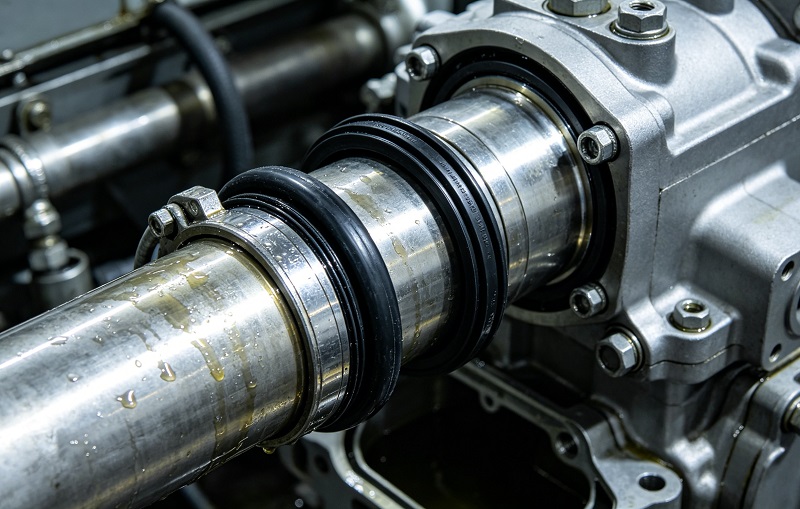
If your hydraulic cylinder leaks under high pressure, your pneumatic valve fails in freezing weather, or your chemical pump seal swells after a few weeks—chances are the material of your custom O-ring is wrong. Selecting the appropriate material for your custom O-ring is not a matter of guesswork. It is a decision guided by five key factors: temperature, chemical compatibility, pressure, motion type, and regulatory requirements. This guide walks you through the most common elastomers used for custom O-ring seals, their strengths and limitations, and how to match them to your specific application. Whether you are an engineer designing a new system or a maintenance professional seeking longer seal life, you will find practical, actionable insights here.
Custom O-ring material selection is driven by temperature range, chemical exposure, pressure level, and whether the seal is static or dynamic.
Each elastomer family offers distinct advantages—no single material works for every application.
A custom O-ring manufacturer with technical expertise helps you avoid costly failures by guiding material choice and custom design.
Common failure modes include extrusion, compression set, chemical attack, and thermal degradation; most are preventable with correct material selection.
Custom rubber seals like Custom Wiper Seals FC, custom dust cover, and custom O-ring seals can be produced with specialized compounds to meet extreme requirements.
The material of a custom O-ring dictates its ability to resist swelling, hardening, cracking, or extrusion under service conditions. Wrong material selection is the leading cause of premature seal failure, leading to fluid leaks, equipment downtime, and costly repairs. When you choose a custom O-ring, you are not just choosing a shape—you are selecting the chemistry that determines how long your seal will perform reliably. A competent custom O-ring manufacturer helps you evaluate compatibility across temperature, pressure, and media to ensure your custom O-ring seals deliver the required service life.
Below is a detailed breakdown of the most widely used materials for custom O-ring seals, ranked by their typical applications and performance characteristics.
Nitrile rubber is the most commonly specified material for custom O-ring applications due to its excellent resistance to petroleum-based oils, fuels, and hydraulic fluids. It offers good abrasion resistance, mechanical strength, and cost-effectiveness. NBR custom O-ring seals are widely used in hydraulic systems, fuel handling equipment, automotive engines, and general industrial machinery. The typical temperature range is -40°C to 120°C, though specialty compounds can extend these limits slightly.
Limitations: NBR has poor resistance to ozone, weathering, and UV exposure. It is not compatible with brake fluids, ketones, phosphate ester hydraulic fluids, and certain polar chemicals.
FKM custom O-rings are the go-to choice when applications involve high temperatures and aggressive chemicals. FKM offers outstanding resistance to oils, fuels, mineral acids, and aliphatic hydrocarbons. The typical service temperature range is -20°C to 200°C, with specialty grades capable of handling even higher peaks. FKM custom O-ring seals are extensively used in aerospace fuel systems, automotive engines, chemical processing equipment, and high-temperature hydraulic systems. They also exhibit low compression set, maintaining sealing force over prolonged periods.
Limitations: FKM has limited low-temperature flexibility compared to silicone and is relatively more expensive than NBR. It also has limited compatibility with low molecular weight esters, ethers, and certain brake fluids.
EPDM custom O-rings excel in applications requiring resistance to hot water, steam, weathering, ozone, and polar chemicals such as brake fluids and silicone oils. They maintain flexibility across a wide temperature range of -50°C to 150°C and are the material of choice for automotive cooling systems, brake systems, HVAC equipment, and outdoor sealing applications. EPDM is also well-suited for custom dust cover applications where environmental exposure is a concern.
Limitations: EPDM has poor resistance to petroleum-based oils, fuels, and mineral acids. It should never be used in contact with hydrocarbons.
Silicone custom O-rings are distinguished by their remarkable flexibility across a very wide temperature range, typically -60°C to 200°C. They maintain elasticity even under extreme cold, making them ideal for low-temperature sealing applications. Silicone also offers excellent compression set resistance and is available in FDA-compliant grades for food and pharmaceutical applications. Common uses include medical devices, food processing equipment, HVAC systems, and high/low temperature static seals.
Limitations: Silicone has poor resistance to petroleum oils and fuels, and lower tensile strength compared to other elastomers. It is generally not recommended for dynamic sealing applications involving high pressure or abrasion.
PTFE is not an elastomer but a polymer that offers near-universal chemical resistance and the widest temperature range of any seal material: -200°C to 260°C. PTFE custom O-rings have extremely low friction and do not absorb fluids. They are the preferred solution for chemically aggressive environments where all other elastomers would fail, such as in chemical processing, pharmaceutical production, semiconductor manufacturing, and cryogenic systems. Since PTFE lacks elasticity, PTFE custom O-rings are often energized by a spring or used with an elastomer backup to provide sealing force.
Limitations: PTFE has high compression set and requires careful gland design. It is more expensive than standard elastomers and is typically used only where other materials cannot meet the requirements.
HNBR is a modified version of NBR with improved heat resistance, ozone resistance, and mechanical strength. Operating in a typical temperature range of -30°C to 150°C, HNBR custom O-rings offer superior abrasion and tear resistance compared to standard NBR. They are widely used in automotive air conditioning systems (with R134a and R1234yf refrigerants), oil and gas exploration, industrial hydraulics, and applications requiring high tensile strength and low compression set.
Limitations: HNBR is more expensive than NBR and has somewhat limited flexibility at very low temperatures.
The table below summarizes the key properties of common custom O-ring materials to help you compare options side by side.
| Material | Temperature Range (°C) | Oil & Fuel Resistance | Chemical Resistance | Weather & Ozone Resistance | Abrasion Resistance | Typical Hardness (Shore A) |
|---|---|---|---|---|---|---|
| NBR | -40 to +120 | Excellent | Good | Poor | Good | 60–90 |
| FKM | -20 to +200 | Excellent | Excellent | Excellent | Good | 65–90 |
| EPDM | -50 to +150 | Poor | Good (polar fluids) | Excellent | Fair | 60–90 |
| Silicone | -60 to +200 | Poor | Fair | Excellent | Poor | 40–80 |
| PTFE | -200 to +260 | Excellent | Excellent | Excellent | Excellent | N/A |
| HNBR | -30 to +150 | Excellent | Good | Excellent | Excellent | 70–95 |
Note: Temperature ranges are approximate and may vary by specific compound formulation.
Start by documenting the service conditions your custom O-ring will encounter:
Temperature extremes: Both minimum and maximum operating temperatures, including transient spikes.
Media contact: All fluids, chemicals, gases, and cleaning agents the seal will contact.
Pressure: Maximum static and dynamic pressure, including any pressure spikes.
Motion type: Is the seal static (no relative motion) or dynamic (reciprocating, oscillating, or rotary)?
Environmental factors: Will the seal be exposed to UV radiation, ozone, weather, or airborne abrasives?
Chemical compatibility is often the most critical factor. Even the best elastomer will fail quickly if exposed to an incompatible fluid. If your application involves petroleum-based oils and fuels, NBR or FKM are appropriate. For brake fluids and hot water, EPDM is required. For aggressive acids, bases, and solvents, PTFE or FKM are the primary options. For refrigerants in automotive air conditioning systems, HNBR is the recommended material.
Dynamic applications (reciprocating or rotary motion) require materials with good abrasion resistance and low friction. FKM, HNBR, and NBR perform well in dynamic seals. PTFE custom O-rings are excellent for high-speed rotary applications but require energizing. For static seals, softer compounds may be acceptable as they conform better to surface irregularities.
Applications in food and beverage processing often require FDA-compliant silicone or EPDM compounds. Medical devices may require USP Class VI or ISO 10993 certification. Aerospace and military applications often specify materials meeting SAE, AMS, or MIL standards. A knowledgeable custom O-ring manufacturer can verify material certifications and provide documentation.
Understanding why custom O-rings fail helps you select the right material and design from the start.
Extrusion: The seal is forced into the clearance gap under high pressure, causing material nibbling. Prevention: Use higher durometer materials, reduce gland clearance, or add backup rings.
Compression set: The seal permanently deforms and loses its ability to rebound, resulting in leakage. Prevention: Select materials with low compression set such as FKM, HNBR, or PTFE; avoid over-compression.
Chemical attack: The seal swells, shrinks, softens, or hardens due to fluid incompatibility. Prevention: Verify chemical compatibility using published charts before selecting the custom O-ring material.
Thermal degradation: Operating temperatures exceed the material's limit, causing hardening, cracking, or melting. Prevention: Choose a material rated for the peak temperature.
Abrasion and wear: Rough surface finishes or contamination cause the seal surface to wear away. Prevention: Specify proper surface finish (Ra ≤ 0.8 μm for dynamic applications); use Custom Wiper Seals FC to exclude abrasive contaminants.
Installation damage: Nicks, cuts, or twisting during assembly lead to immediate or early failure. Prevention: Deburr hardware edges, lubricate seals generously, and use proper installation tools.
Custom O-ring seals are critical components in virtually every industrial sector:
Automotive: Fuel systems, engine seals, transmission seals, air conditioning systems, braking systems, and cooling systems.
Hydraulic and Pneumatic Systems: Cylinder seals, valve seals, pump seals, and manifold seals.
Chemical Processing: Pump and valve seals handling aggressive acids, bases, and solvents (typically PTFE or FKM).
Food and Beverage: FDA-compliant silicone or EPDM seals for processing equipment, filling machines, and sanitary fittings.
Medical and Pharmaceutical: Silicone seals for medical devices, surgical instruments, and drug delivery systems.
Aerospace: FKM seals for fuel systems and hydraulic systems operating under extreme temperature and pressure.
Oil and Gas: HNBR and FKM seals for downhole tools, blowout preventers, and pipeline equipment.
For applications requiring protection from external contaminants, custom dust cover components can be integrated with custom O-ring seals to extend service life in dirty environments. Custom Wiper Seals FC are also commonly paired with custom rubber seals to provide dual protection.
Q1: What is the difference between a standard O-ring and a custom O-ring?
A: A standard O-ring conforms to AS568 or ISO 3601 dimensions. A custom O-ring is manufactured to non-standard dimensions—custom inner diameter (ID), outer diameter (OD), or cross-section (CS)—or uses specialized elastomer compounds to meet unique application requirements that off-the-shelf products cannot satisfy.
Q2: Which material is best for high-temperature applications?
A: For most high-temperature applications, FKM (fluorocarbon) is recommended, with a typical service range up to 200°C. For extreme heat beyond 250°C, PTFE or specialty perfluoroelastomer (FFKM) grades are required, though they come at a higher cost.
Q3: What material should I use for hydraulic oil sealing?
A: For standard mineral-based hydraulic oils, NBR is the most common and cost-effective choice. For high-temperature hydraulic systems or fire-resistant fluids, FKM is often specified. HNBR offers enhanced mechanical strength and heat resistance for demanding hydraulic applications.
Q4: Can I use the same custom O-ring material for both static and dynamic applications?
A: Not necessarily. Dynamic applications (reciprocating or rotary motion) require materials with good wear resistance, low friction, and controlled compression set. Softer materials like silicone may perform adequately in static seals but fail quickly under motion. Consult a custom O-ring manufacturer for application-specific recommendations.
Q5: Why do my custom O-ring seals keep failing due to extrusion?
A: Extrusion occurs when the seal is forced into the clearance gap under pressure. Common causes include excessive gland clearance, overly soft material (low Shore A hardness), or operating pressure exceeding the seal's design limit. Solutions include using higher durometer materials (80–90 Shore A), adding backup rings, or redesigning the gland with reduced clearance.
Q6: What is the typical lead time for custom rubber seals from MingYu?
A: Lead times vary by complexity and order volume. For standard custom O-ring compounds and non-standard dimensions, tooling and sampling typically require 2–4 weeks. Custom rubber seals with specialized compounds may require additional development time. Contact the MingYu engineering team for a project-specific timeline.
Choosing the right custom O-ring material is a critical engineering decision that directly impacts the reliability, safety, and operating costs of your equipment. From NBR for general-purpose hydraulics to FKM for high-heat applications and PTFE for chemical resistance—the correct material ensures your custom rubber seals perform as intended throughout their service life.
As an experienced custom O-ring manufacturer with nearly 30 years of expertise, MingYu Sealing Technology combines advanced material science with precision manufacturing. Certified under IATF 16949 and ISO 9001, we provide custom O-ring seals tailored to your exact specifications. Whether you need Custom Wiper Seals FC, custom dust cover components, or custom rubber seals for automotive, construction machinery, or industrial applications, our engineering team is ready to assist—from material selection and prototype development to high-volume production and quality assurance.
Visit www.mingyuseals.com to explore our sealing solutions or contact our technical team today for a consultation. Let us help you engineer the perfect custom O-ring for your application.


